
THE IVORI BUYER’S GUIDE · ADULT BRUSHING COMFORT
Sensitive teeth and gums:
choose a gentler-feeling brush.
Soft bristles, a calmer brushing setting or help with pressure? Find the features that answer your comfort question, then build a shortlist that makes sense.
Find your starting point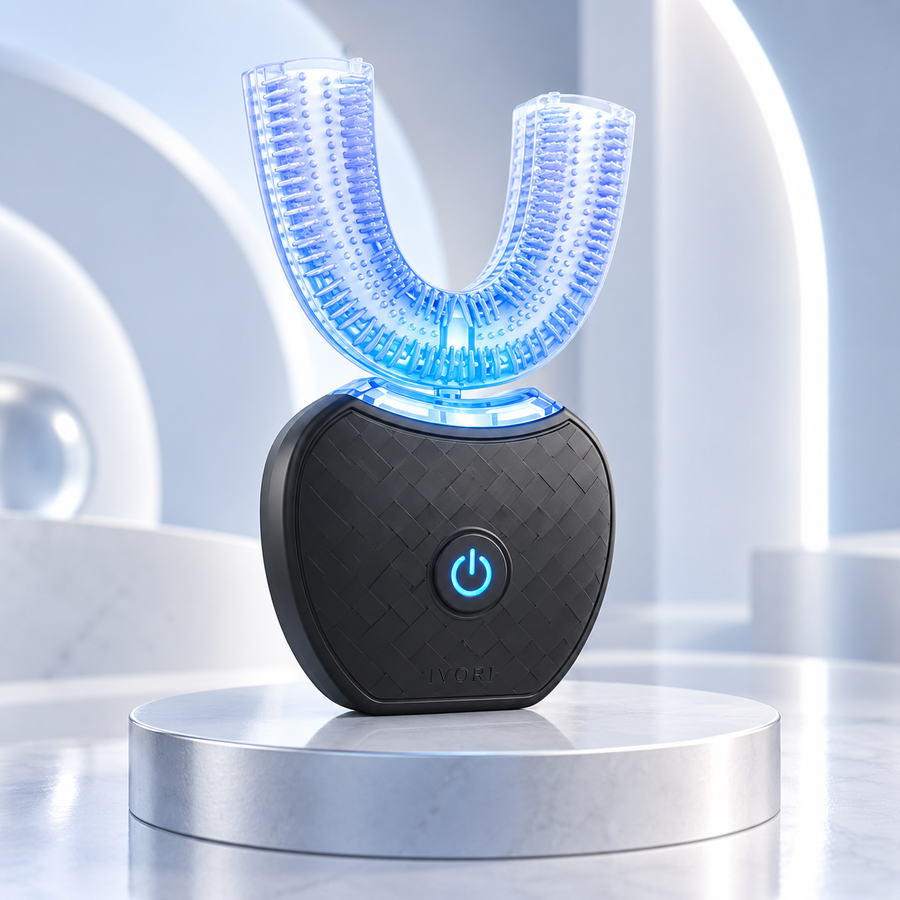
THE SHORT ANSWER
Buy for the part of brushing you want to feel different. For softer contact, compare the actual head and bristle material. For a less intense powered sensation, look for a gentle setting. For a reminder when you press too hard, prioritise a verified pressure sensor. For a U-shaped brush, comfortable mouthpiece fit belongs on the shortlist from the start.
IVORI One combines flexible silicone bristles with a soft tooth care mode. A soft manual brush offers brushing without motor vibration; selected powered brushes add low-intensity settings or pressure feedback. The right choice depends on which of those features matters to you.1, 4, 5
This guide is about choosing a brush for adults. New, persistent or unexplained sensitivity, painful gums or bleeding deserve dental advice; a comfort feature does not identify or treat the cause.2, 9
01 / NAME THE FEELING
What would you most
like to change?
“Gentle” can describe the bristles, the powered movement, the pressure you apply or how a mouthpiece sits. Those are separate buying questions. Choose the closest match below to see the most useful feature to compare first.
YOUR STARTING POINT
Compare the contact surface first
Look at the exact brush head: its material, softness and shape. IVORI One offers soft silicone bristles; a soft or extra-soft conventional head offers a different texture. Check what is included in the box and what replacement you would buy.
Explore the four comfort checks ↓All four routes are explained in the cards below, so you can use this guide without the chooser. This is a shopping aid, not a symptom assessment.
02 / UNDERSTAND THE FEATURES
Four checks.
One more useful shortlist.
Read a brush listing as a set of separate features rather than one overall “sensitive” label. A soft head with a strong-feeling motor and a firmer head on a low setting can create different experiences. Neither description is a complete answer on its own.

01 · WHAT TOUCHES YOUR TEETH
Bristle contact
Check the head supplied with the brush, not just the handle’s name. Softness, filament shape and material all belong in this comparison. A replacement with a different label may change the experience. The ADA recommends soft bristles and gentle pressure; IVORI One offers a flexible silicone contact surface.1, 3
02 · HOW THE MOVEMENT FEELS
Vibration and intensity
A mode is a named brushing programme; an intensity setting adjusts the strength within the options a brush provides. Check which the exact model offers. “Sensitive”, “soft” and “low” are useful search terms, but they are not a shared measurement scale across brands. A manual brush has no motor vibration.
03 · FEEDBACK WHILE BRUSHING
Pressure guidance
A pressure sensor can alert you when you press too hard. Some models use a visible light; others change their vibration or speed. Ask what the signal means and how you are meant to respond. A lower motor setting does not automatically mean you are applying lighter pressure.
04 · THE SPACE INSIDE YOUR MOUTH
Head or mouthpiece fit
A conventional head needs comfortable room to reach the surfaces you clean. A wraparound mouthpiece has a broader shape to assess. Check sizing guidance and whether it can sit as instructed without forcing or pinching. A brush’s external dimensions alone do not establish that it fits your teeth.
Make the question specific: “I want a softer contact texture” leads to a head comparison. “I want a reminder to ease off” leads to a sensor comparison. “I dislike the powered sensation” leads to the available settings, or a manual option. You may care about more than one.
03 / COMPARE REAL OPTIONS
Four starting points.
Different comfort strengths.
These are examples for building a shortlist, not a clinical ranking. Compare the exact model and head in the listing you are buying: a familiar range name can cover different generations, bundles and included accessories.
SOFT SILICONE · WRAPAROUND FORMAT
IVORI One
Silicone bristles · Soft tooth care mode · Adult U-shaped mouthpiece
Why shortlist it: you want a flexible silicone texture and a softer brushing option in the same adult device. Its mouthpiece surrounds both rows of teeth, creating a different contact experience from a small conventional head.
The buying trade-off: prioritise mouthpiece comfort and fit. One’s verified comfort features are its bristles and mode; a pressure-alert feature is not listed in the product information reviewed for this guide. If pressure feedback is your deciding feature, compare a brush that explicitly provides it.
NO MOTOR VIBRATION · CONVENTIONAL HEAD
TePe Select X-soft
Extra-soft filaments · End-rounded tips · Tapered head
Why shortlist it: you want a conventional manual brush with an extra-soft contact option. TePe describes its end-rounded filaments and tapered head, giving you a specific head design to compare rather than a generic “gentle” promise.
The buying trade-off: there is no powered sensation or electronic pressure feedback. Your brushing pressure and technique still matter. Check the regular or compact head variant instead of assuming every Select pack is identical.
SONIC · ADJUSTABLE INTENSITY
Philips Sonicare Series 6100
HX7400/01 · Sensitive mode · Three intensities · Visual pressure alert
Why shortlist it: you want separate intensity choices as well as a Sensitive programme. Philips lists an S2 Sensitive head and a light ring that warns about excessive pressure on this model.
The buying trade-off: it remains a powered sonic brush, even on a lower setting. Check the model code carefully: the older ProtectiveClean 6100 is a different product. Verify the supplied head and the cost of keeping that head type in your routine.
ROUND HEAD · PRESSURE FEEDBACK
Oral-B iO3 + Gentle Care head
Round iO head · Sensitive mode · Visible pressure feedback
Why shortlist it: pressure feedback is your priority, and you want a round powered head. Oral-B’s UK iO comparison lists a Sensitive mode and visible pressure guidance for the iO3; its iO Gentle Care head is a softer-head option to compare.
The buying trade-off: check the bundle. A Gentle Care head should not be assumed to come in every iO3 box. Replacement heads must be from the compatible iO family; heads for an older Oral-B Pro or Vitality are a different purchase.
Buy the feature you will actually use
Extra modes, an app or a premium finish may be enjoyable, but they are separate from the comfort feature that put a brush on your list. Put the key requirement at the top of your comparison: the desired head, a lower setting, a pressure warning or the right mouthpiece format. Then compare the full basket and replacements.
A useful shortlist can contain only two options. If you want motor-free brushing, begin with suitable manual heads. If you want feedback while using a powered brush, compare the sensor-equipped models. If soft silicone contact interests you, explore One’s mouthpiece and soft mode in more detail below.
04 / PUT YOUR PRIORITY INTO PRACTICE
Which situation
sounds like yours?
Start with a real preference rather than a long wish list. These situations show how the same product features can lead to different decisions.
“THE BRISTLES FEEL TOO FIRM.”
Look at the head before replacing everything.
If you otherwise like your existing powered brush, check whether its maker offers a compatible softer head. Record the handle model and the head’s full name. A “sensitive” replacement for a different brush family is not automatically compatible.
For a new brush, compare a soft conventional head with One’s silicone texture. The decision is the contact experience you want; a softer-sounding label does not justify pressing harder. Ask your dental team to check technique if brushing is uncomfortable.
“I DISLIKE THE BUZZING SENSATION.”
Separate texture from motor feel.
A softer head may change contact without removing the powered sensation. Look for a clearly specified lower intensity or gentler programme, such as the options on Philips HX7400/01, and check the maker’s instructions for starting with it.
If you specifically want no motor vibration, a manual option like TePe Select X-soft answers that preference directly. Choose a brush you can use comfortably and thoroughly; there is no need to buy more modes merely because they are available.
“I KEEP BEING TOLD TO EASE OFF.”
Prioritise useful pressure feedback.
Put a verified pressure alert above cosmetic features. Check whether the feedback is visible, tactile or automatic, and read what action it asks you to take. A sensor gives a cue during brushing; it does not inspect your gums or confirm that every tooth surface is clean.
Bring the brush to your next dental appointment if you want help interpreting its signals. A demonstration can connect the device’s feedback to the technique recommended for you. Do not deliberately press harder on a painful area to test an alert.
“I LIKE THE IDEA OF A SOFT MOUTHPIECE.”
Make fit part of the purchase.
One’s soft silicone bristles and soft tooth care mode give you a clear reason to investigate it. Next, ask how the adult mouthpiece should sit and what size information is available. Think about the space around your teeth, not only how compact the device looks in a photograph.
If you have dental work, fixed braces or a fit concern, take that question to IVORI and your dental professional before buying. A wraparound shape needs comfortable placement; forcing it into position is not a way to improve coverage.
“MY TEETH HAVE JUST BECOME SENSITIVE.”
Get the new symptom checked.
A new twinge, ongoing pain or bleeding can make shopping feel urgent. Sensitivity has several possible causes, so a gentler-feeling brush is only one part of the conversation. Describe what happens during your normal routine and ask your dentist what should be assessed.2
Use this shortlist once you know what changes are appropriate. Our sensitivity questions guide helps you prepare for that conversation, including when to seek prompt care. Do not deliberately trigger discomfort to compare two brushes.
05 / A CLOSER LOOK AT IVORI ONE
Soft silicone.
A softer brushing option.
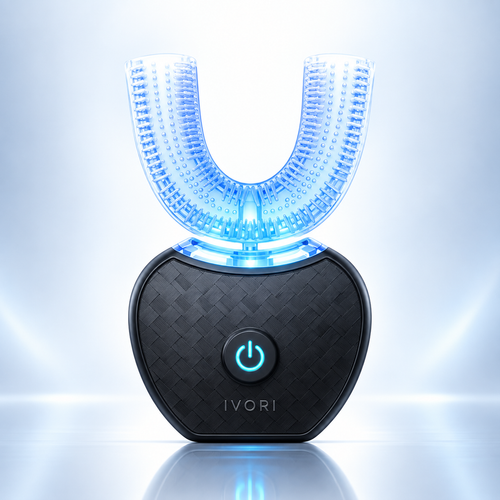
One brings a flexible contact material and a dedicated soft tooth care setting into an adult U-shaped brush. Those are its most relevant features for this shopping question: a different bristle texture and a gentler-feeling programme to explore.

THE COMFORT-FOCUSED DETAILS
Start with what
touches your teeth.
- Contact material
- Flexible silicone bristles
- Softer option
- Soft tooth care mode
- Format
- Adult U-shaped mouthpiece
- Care
- Rinse and air-dry after use
Read the four modes as different options
One lists four modes: strong brushing, soft tooth care, gum massage and Boost+. For this guide’s comfort goal, soft tooth care is the relevant starting point to discuss alongside the included directions. The mode names describe available programmes; they are not four clinically ranked treatments.1
Strong brushing
A named brushing option; choosing a brush for comfort does not require choosing its most forceful-sounding setting.
Gum massage
A separately named programme. Use the included guide to understand it; the name is not a promise to treat sore or bleeding gums.
Soft tooth care
The softer option to put on your comparison list when a gentler brushing feel is your priority.
Boost+
IVORI’s whitening setting. Cosmetic goals do not need to determine your comfort-focused purchase.
Give the mouthpiece a fair fit check
Follow the supplied guide for positioning and movement. The mouthpiece should settle comfortably, and it should never need to be forced. If one area feels compressed or the mouthpiece does not sit as directed, stop and ask for help rather than pushing it farther into place.
Contact comfort and cleaning coverage are both worth discussing with your dental team. A broad U-shape describes the format; your own teeth and the instructed movement still matter. For a first-use sequence, read getting started with IVORI One.
06 / MAKE THE FIRST USE INFORMATIVE
Start calmly.
Keep the routine clear.
A useful first week tells you whether the brush fits your preferences and whether you understand its intended use. It is not a challenge to tolerate discomfort or a deadline for symptoms to disappear.
07 / THINK PAST THE FIRST BOX
Keep the head you chose.
Plan the next one.
The brush you buy today creates a small ongoing system: the contact surface you replace, the supplies you use and the care that keeps it ready. Compare that system before checkout so a comfortable choice stays practical.
FIRST PURCHASE
What comes in the box?
Check the exact brush, head type and required charging items. One is listed at £39.00 and includes a handle, silicone-bristle head, USB-C cable and instruction manual. Check the current offer and delivery at checkout.1
For another powered brush, verify the included head rather than buying a preferred soft head twice. For a manual brush, compare the exact softness and head size.
ONGOING OWNERSHIP
What will you replace?
Keep the head’s exact name or product code. Find its current availability and pack price, and check the manufacturer’s replacement advice. A head bundle is only useful if it contains the version you want and fits your brush.
Budget for the replacement part you will actually use, not a generic cheapest head with a similar name. The upfront handle price alone does not show the cost of ownership.
Keep the contact surface in good condition
One’s published care guidance says to rinse the mouthpiece thoroughly after use and allow it to air-dry. Its head-replacement guidance is every six months, or sooner for wear, damage or changed fit. For other brushes, follow their own instructions; the ADA’s general toothbrush guidance is replacement about every three to four months, sooner if worn.1, 3
Put the reminder against the head you own, and inspect it rather than waiting for a date regardless of condition. Do not trim, reshape or improvise a repair to a contact surface that feels wrong. Keep each person’s brush separate.
Read the return conditions before opening
Fit and feel can be difficult to judge from a listing, which makes the seller’s actual trial or returns wording important. Check whether an opened oral-care product is covered, any time limit, the condition required and who pays return postage. A general returns banner should not be assumed to guarantee a used-brush trial.
- The feature: does this exact model address my main comfort priority?
- The contact surface: is the intended soft head or mouthpiece included?
- The next purchase: can I find the correct replacement and its price?
- The support route: where do I ask a fit, use or compatibility question?
- The terms: what happens if the product is unsuitable after opening?
08 / THE QUESTIONS BEFORE CHECKOUT
A few details
worth settling.
What is the best toothbrush for sensitive teeth?
There is no single feature that answers every sensitivity concern. For a shopping shortlist, identify whether you want softer bristles, a lower-powered feel, pressure feedback or a better-fitting contact surface. If symptoms are new or unexplained, ask your dentist about the cause before treating a brush purchase as the solution.2
Are softer bristles enough if I brush too hard?
Soft bristles and light pressure belong together. A softer contact material does not cancel out pressing too hard. If pressure is a recurring concern, compare a verified feedback feature and ask your dental team to demonstrate the technique they recommend.3
Does a Sensitive mode work like a pressure sensor?
No. A mode is a brushing programme; a sensor monitors pressure and provides the feedback specified for that model. A brush can offer one without the other. Check both fields separately rather than assuming a comfort-themed mode includes a warning system.
Is a U-shaped brush automatically more comfortable?
Comfort depends on its material, movement and fit in your mouth. One offers soft silicone bristles and a soft tooth care mode, which are useful features to explore. The mouthpiece still needs to sit comfortably as directed; its shape alone cannot promise the same experience for everyone.
Should I change my brush and sensitivity toothpaste together?
Follow the plan agreed with your dentist, including any specific toothpaste recommendation. If you are comparing a new brush by preference, keeping the rest of the routine consistent can make the experience easier to judge. New symptoms are a reason to ask for advice rather than repeatedly swapping products.2
Can I use a gentle brush after dental treatment?
Follow your treating dental professional’s instructions for the area and the timing of brushing. A soft label does not establish that a product is appropriate immediately after a procedure. Show them the exact brush or mouthpiece you intend to use and ask how it fits the aftercare plan.
Should I push through discomfort while I get used to a new brush?
No. Check fit and instructions, and stop if use causes pain or irritation. Do not extend sessions, increase pressure or repeatedly test a painful area. Contact your dentist for ongoing symptoms and the manufacturer for a device-fit or use question.
YOUR NEXT STEP
Explore a softer
contact experience.
If flexible silicone bristles and a soft brushing option are what you are looking for, take a closer look at adult IVORI One. Check the mouthpiece, read the included-care details and choose around the comfort feature that matters to you.
Sources & product information
For UK adult buyers. General care guidance comes from the organisations below; named features come from each manufacturer. This is a specification-based buying guide, not a hands-on clinical comparison. Product information checked 6 October 2026.
- IVORI One: adult product information, modes, mouthpiece, included items and care
- American Dental Association, MouthHealthy: sensitive teeth and possible causes
- American Dental Association: toothbrushes, soft bristles, pressure and replacement
- TePe: Select X-soft model and head options
- Philips: Sonicare Series 6100 HX7400/01, S2 head, modes, intensity and pressure alert
- NHS: how to keep your teeth clean, adult fluoride and routine
- Oral-B UK: iO3 Sensitive mode and visible pressure feedback
- Oral-B UK: iO Gentle Care and replacement-head compatibility
- NHS: bleeding, painful and swollen gums
- NHS: toothache, dental assessment and emergency warning signs